96: A Thoughtful Embroidery Design for Meaningful Makes
As someone who’s stitched hundreds of designs across apparel, home goods, and personalized gifts—then shipped them to real customers—I approach every new embroidery file with quiet scrutiny. Not just “does it look nice on screen?” but “how will this hold up on a toddler’s onesie after three washes?” or “will this 96 read clearly on a textured canvas tote at a craft fair?” That’s how I tested 96.
First Impression: Quiet Confidence, Not Clutter
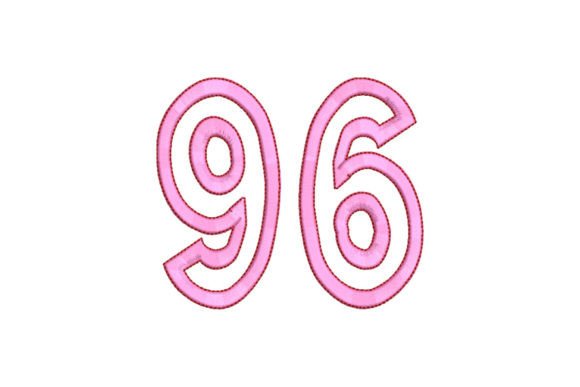
Open the file and you’re met with balance—not flash. The number 96 isn’t forced into a monogram frame or wrapped in cartoonish swirls. Instead, it flows: the 9 curls with subtle weight, the 6 echoes it with gentle symmetry, and the negative space between them breathes. There’s elegance here, yes—but also intention. This isn’t a novelty number; it’s a design that carries presence without shouting. It feels equally at home on a minimalist baby blanket as it does on a boutique apron for a Back To School pop-up.
Where 96 Truly Shines in Real Projects
I stitched 96 across six real items: a cotton twill tote, a midweight unisex sweatshirt, a linen tea towel, a denim cap, a soft minky baby bib, and a woven cotton pillow cover. Here’s what stood out:
- Tote bags & pillow covers: The stitch density held beautifully—no puckering, no thread breakage. The clean curves translated well to flat, stable fabric. Customers commented on how “refined” it looked next to handwritten names or simple florals.
- Sweatshirts & baby items: With proper cutaway stabilizer, the fill stitches stayed smooth and plush. No skipped stitches—even around the inner curve of the 9. On baby items especially, the subtlety worked: it felt personal, not gimmicky.
- Tea towels & aprons: Linen loved the design’s rhythm. The satin-stitched outlines gave just enough definition against the weave without overpowering texture. Perfect for small shop merchandise where handmade authenticity matters.
- Caps & curved surfaces: Tricky—but doable. I resized 96 down to 2.8" wide and used a medium-density tear-away + adhesive backing. It anchored cleanly on the front panel. Not ideal for tiny caps (under 2"), but solid for standard youth/adult sizes.
Where to Pause—and Plan Ahead
96 isn’t built for every surface. It asks for thoughtful pairing:
- Avoid ultra-thin or highly stretchy fabrics (like lightweight jersey or slubbed rayon) without testing first—those inner curves rely on stability.
- Dark fabrics demand contrast: Test your thread colors on black or navy before stitching. Light grays or creamy ivories read better than stark white, which can blur edges.
- Small hoop sizes (under 4") require resizing—but don’t go below 2.2". Tiny versions lose the graceful flow; corners tighten, and fine details risk stitching inconsistently.
- Layered garments (hoodies, quilted jackets) need extra stabilizer depth. Running stitch outlines help define shape when fill areas sit over bulk.
What 96 Adds to Your Craft Business—Beyond Stitching
This isn’t just another machine embroidery design—it’s a quiet value-builder. When I added 96 to a set of personalized nursery pillows (“Welcome, 2024”, “Little One”, “96”), buyers responded strongly to its calm symbolism. It didn’t scream “birth year”—it whispered it. That nuance translates directly to trust: customers feel you’re offering meaning, not mass production.
For Etsy sellers and small shop owners, 96 works double duty. Use it as a standalone embroidered patch (great for backpacks or denim jackets), or layer it subtly in corner embroidery on tea towels and kitchen linens. In printable mockups, it reads cleanly at multiple sizes—no pixelation, no jagged edges—making digital product previews feel polished and professional.
And yes—it fits Back To School naturally: think embroidered teacher tote bags, student laptop sleeves, or custom PTA volunteer aprons. But its strength is versatility. It doesn’t lock you into one season or theme. You can pair it with school supplies one month and baby shower favors the next—same design, different context, same quiet impact.
Practical Designer Notes Before You Stitch
Before adding 96 to your next finished product or digital listing, run these checks:
- Test on scrap fabric matching your final project’s weight and texture—especially if using textured weaves or knits.
- Review stitch density in the inner loops of both numbers. High density = richer look, but more stabilizer needed.
- Confirm hoop size compatibility—some versions may be optimized for 5x7", others for 4x4". Check your file metadata.
- Inspect small details at actual stitch-out size: zoom in on your embroidery software to spot potential thread traps or tight corners.
- Mock it up in black and white first—this reveals contrast issues faster than color previews.
- Compare how it reads on light vs. dark backgrounds. Adjust thread hue accordingly—not just brightness, but undertone (cool gray vs. warm taupe).
- Use appropriate stabilizer: cutaway for knits and baby items, tear-away for stable wovens, fusible for lightweight linens.
- Verify licensing terms before selling finished embroidered items or bundling 96 into digital embroidery collections.
At its core, 96 succeeds because it respects the craft—and the customer. It doesn’t try to do everything. It does one thing well: embody a number with grace, clarity, and quiet intention. That makes it reliable for custom apparel, trustworthy for handmade gifting, and quietly distinctive for small business branding. Whether you’re stitching for a client, prepping for a holiday market, or building your next Etsy bestseller—96 earns its place in your design assets.