Middle School Teacher
First Impression: Whimsical, Warm, and Instantly Relatable
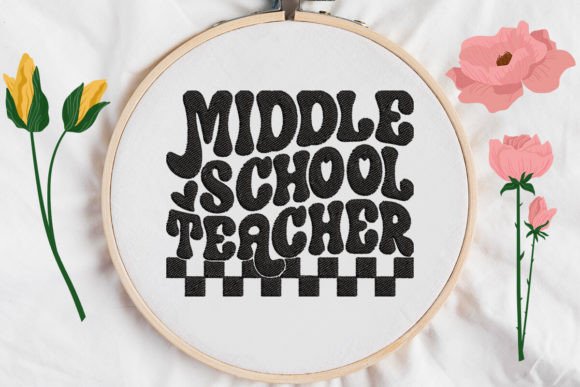
As an embroidery designer who’s prepped over 200 craft fair booths—and shipped thousands of machine embroidery designs to Etsy sellers and boutique makers—I opened Middle School Teacher expecting charm. What I got was more: a design that feels authentically human, gently humorous, and quietly confident. It doesn’t shout “Back To School!” with loud apples or chalkboards. Instead, it leans into warmth—think hand-drawn flair, balanced spacing, and a friendly rhythm in the lettering. It reads as whimsical first, professional second, and deeply handmade third. That trifecta is gold at craft fairs, where shoppers scan tables in under three seconds.
Where It Shines: Real Craft Fair Product Pairings
Tote bags are the top performer for Middle School Teacher. Centered on a natural canvas or oatmeal linen tote, it reads clearly from six feet away—no squinting, no confusion. The design’s inherent softness pairs beautifully with relaxed, unstructured bags, making it feel intentional, not slapped on. As a tote bag design, it signals thoughtfulness—not just utility.
Aprons come in a close second. Positioned above the pocket or centered on the bib, Middle School Teacher adds personality without overwhelming the garment’s function. Teachers, homeschoolers, and creative moms instantly connect—it’s aspirational yet grounded. Bonus: it photographs cleanly for Instagram Reels and Etsy listings, especially when styled with chalk, coffee mugs, or lesson plans.
Tea towel embroidery works exceptionally well—if the design avoids tiny flourishes near the hem. On medium-weight cotton towels, the whimsy translates without bleeding or fuzzing. Just avoid ultra-textured waffle weaves unless you’ve tested stabilizer layers thoroughly.
Embroidered patches are where Middle School Teacher becomes versatile. Iron-on or sew-on, they let customers personalize backpacks, denim jackets, or classroom supply caddies. Patches also scale down gracefully—unlike many “Back To School” designs that collapse at 3 inches wide.
For caps and curved surfaces, proceed with caution. If the original embroidery file includes tight curves or fine interior details (e.g., tiny glasses or chalk-dust accents), those elements may distort. Always test on scrap fabric *before* hooping a full batch.
What Holds It Back (And How to Fix It)
This isn’t a high-density, fill-heavy machine embroidery design—and that’s its strength. But that also means it relies heavily on contrast and clarity. On dark fabric? Use bright, matte thread colors (think mustard yellow or teal) instead of metallics or pastels that disappear. On thick, napped fabrics like terry cloth towels, add cutaway stabilizer *beneath* and tear-away *on top* to prevent puckering and keep letterforms crisp.
Small lettering is present—but not dangerously tiny. Still, avoid shrinking Middle School Teacher below 3.5 inches wide for finished products. Below that, spacing tightens, and legibility suffers—especially under booth lighting or on mobile Etsy thumbnails.
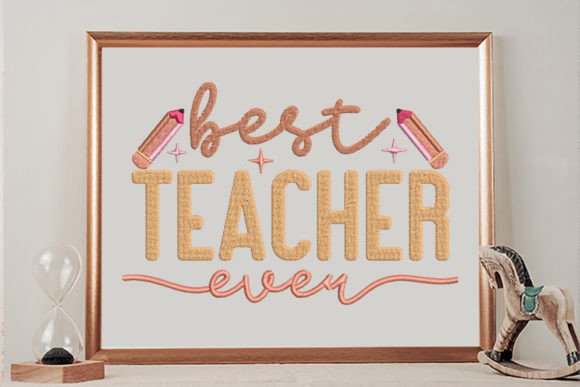
If your version includes decorative flourishes (stars, pencils, subtle doodles), inspect stitch density closely. Overly dense areas trap moisture, stiffen fabric, and increase production time. For high-volume craft fair prep, prioritize clean outlines and open interiors—Middle School Teacher already leans this way, which makes it batch-friendly.
Booth Impact & Buyer Engagement
At a crowded handmade market, Middle School Teacher stands out by *not* competing. While others lean into cartoonish apples or rigid serif fonts, this design breathes. It invites conversation: “Is that for *my* sister? She teaches 7th grade science!” That emotional hook converts browsers into buyers faster than any price tag.
Display it across three coordinated items—a linen apron, a matching tea towel, and a patch set in a kraft box—and you create instant brand consistency. Customers don’t just buy one item; they imagine the whole lifestyle. That’s how small shop products become signature offerings.
For Etsy sellers, pair Middle School Teacher with strong printable mockups. Show it on a sunlit kitchen counter, not a sterile white background. Buyers scroll fast—they need to *feel* the texture, the warmth, the real-life use. A flat, isolated PNG won’t cut it. Your mockup should whisper, “This belongs in your home.”
Production Must-Dos (From One Designer to Another)
- Test before you commit: Run Middle School Teacher on scrap fabric matching your final product—same weight, same weave, same dye lot.
- Check thread contrast: Print a swatch of your chosen thread colors on paper first. Does the combo pop—or mute?
- Review spacing and kerning: Zoom in on the embroidery file. Are letters evenly spaced? Does the “o” in “School” sit comfortably next to the “c”? Poor spacing kills professionalism.
- Confirm hoop size compatibility: If you’re stitching on curved caps or small pouches, verify the design fits your smallest hoop with margin to spare.
- Inspect stitch density: Look for overlapping satin stitches or excessive underlay—these cause stiffness and thread breaks during long runs.
- Use the right stabilizer: Lightweight cutaway for knits, medium tear-away for quilting cotton, and fusible + cutaway for textured towels.
- Create at least one real mockup: Not digital—actual stitched, pressed, and photographed. Lighting changes everything.
- Compare fabric colors: A cream thread on ivory linen reads differently than on oatmeal. Swatch both.
- Confirm commercial licensing: Before selling finished products, double-check your license allows resale of physical goods—not just digital embroidery files.
Final Thought: A Quiet Workhorse for Creative Entrepreneurs
Middle School Teacher won’t dominate a booth with flash—but it will earn repeat customers, thoughtful tags, and heartfelt thank-you notes. It’s the kind of handmade product that feels personal without being precious, playful without being childish, and professional without being stiff. For Cricut crafters adding embroidered accents, for Etsy sellers building a cohesive Back To School collection, and for small-batch designers curating a meaningful booth lineup—it’s not just another embroidery file. It’s a story waiting to be stitched, shared, and worn with pride.