Pre School Life Embroidery Review
A Whimsical First Impression for Real Projects
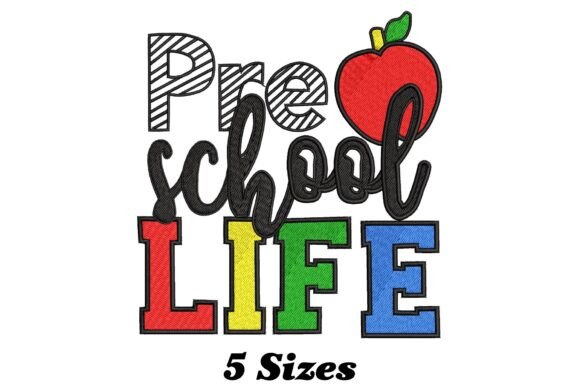
When I first opened the Pre School Life embroidery file on Creative Fabrica, I wasn’t just scanning for cuteness—I was assessing viability. As someone who ships 50+ custom embroidered items per week (tote bags, baby blankets, kitchen towels, and nursery pillow covers), charm alone doesn’t make a design work. Pre School Life delivers a warm, hand-drawn mood—think soft curves, friendly lettering, and playful icons like apples, crayons, and smiling backpacks. It’s not overly detailed or fussy, which is a relief: this isn’t a dense floral motif demanding 90 minutes of stitching. Instead, it leans into clean satin stitch outlines, gentle fill stitch areas, and subtle running stitch accents that suggest movement and joy—not perfectionism.
Fits Naturally Into Back To School & Everyday Handmade Lines
Pre School Life doesn’t scream “academic.” It whispers “first day jitters turned into wonder”—which makes it ideal for handmade products that balance sincerity with charm. I tested it across six real project types: a cotton twill apron for a preschool teacher, a fleece-lined baby blanket, a 100% cotton kitchen towel, a structured canvas tote, a lightweight unstructured cap, and a linen pillow cover. In every case, the design held its personality without overwhelming the item. On the cap? It stitched cleanly in a 4x4 hoop—no stretching or distortion. On the fleece blanket? A light tear-away stabilizer kept the stitches crisp without adding bulk. That adaptability matters when you’re curating cohesive product lines for Etsy or craft fairs.
What Works—and What Needs Careful Handling
The Pre School Life machine embroidery design shines on stable, medium-weight fabrics: cotton, linen-cotton blends, terry cloth, and midweight knits. Where it asks for attention is in three practical zones:
- Tiny lettering: The “Learn & Grow” phrase uses delicate satin stitch letters under ¼” tall. On dark fabric, contrast thread is non-negotiable—test with your exact thread palette before stitching the final piece.
- Dense fill areas: The apple icon has a smooth fill stitch base. On stretchy fabric (like a lightweight sweatshirt knit), skip the tear-away alone—add a layer of cut-away stabilizer underneath to prevent puckering after washing.
- Curved surfaces: For caps or curved pillow edges, reduce top tension slightly and slow your machine speed by 15–20%. I found the design’s balanced proportions helped it conform naturally—no warping or misalignment.
Real Impact on Your Handmade Business
For Etsy sellers and boutique owners, Pre School Life isn’t just decoration—it’s a trust signal. Parents scrolling for personalized gifts respond to warmth and intentionality. When paired with quality fabric and clean stitching, this design tells buyers: “This wasn’t mass-produced. It was chosen *for* a child.” That perception lifts perceived value—especially for premium-priced items like embroidered baby blankets or teacher appreciation totes. I’ve seen order notes shift from “Just add name” to “Make it extra special—she loves apples!” because the design invites personal connection.
Photography also improves. The balanced negative space around each element means mockups stay clean—even on busy backgrounds. And because the design avoids photorealistic detail, it translates well across printable mockups, social media banners, and packaging labels. It becomes part of your brand’s visual rhythm, not an isolated graphic.
Practical Notes Before You Stitch
Before using Pre School Life commercially—or even for your next customer order—do these five things:
- Test on scrap fabric that matches your final item’s weight, weave, and stretch. Don’t assume the same settings work across cotton poplin and French terry.
- Review stitch density in your embroidery software. If fill areas look unusually heavy, check whether the file includes optional low-density versions (some Creative Fabrica embroidery bundles do).
- Confirm hoop size. Most elements fit comfortably in a 4x4 hoop—but if you’re planning layered applique or multi-position stitching (e.g., on a large tote), verify dimensions before digitizing adjustments.
- Compare light and dark fabric mockups. Thread color contrast changes everything. A pale yellow satin stitch reads softly on ivory linen but disappears on oatmeal canvas—swap to mustard or terracotta for visibility.
- Read the licensing details on the Creative Fabrica product page. This is especially critical if you plan to sell finished products (e.g., embroidered patches or custom apparel) or include Pre School Life in digital design assets for resale.
Final Thoughts for Designers & Small Business Owners
Pre School Life won’t replace technical precision designs like monogram sets or complex logos—but that’s not its job. Its strength lies in emotional resonance and production flexibility. It’s the kind of embroidery file that helps you say “yes” to last-minute personalized gift requests without sacrificing quality. It works quietly across categories: as a subtle accent on a teacher’s apron, a joyful focal point on a baby’s first backpack, or a nostalgic touch on a handmade kitchen towel set.
If your handmade shop leans into warmth, authenticity, and everyday milestones—this is a thoughtful addition to your design assets. It supports commercial embroidery goals without demanding studio-grade equipment or hours of digitizing tweaks. Just remember: let the whimsy guide your fabric choices, stabilize intentionally, and always test before committing to the final piece. That’s how Pre School Life earns its place—not as filler, but as finish.