Thankful Teacher
First Impression: Warm, Sincere, and Craft-Fair-Ready
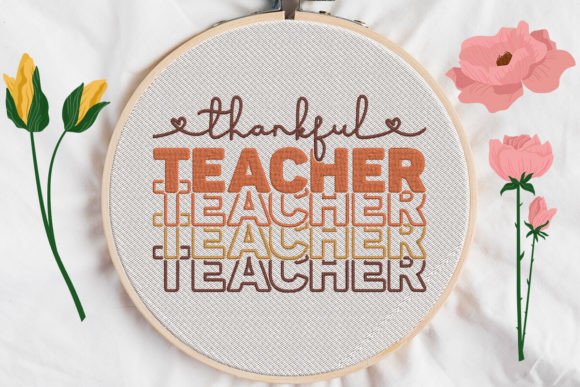
As an embroidery designer who’s prepped over 200 craft fair booths—from snowy Vermont markets to sun-drenched Southern pop-ups—I opened Thankful Teacher expecting sentimentality. What I found was something sharper: grounded, heartfelt, and quietly confident. It doesn’t shout “cute” or lean into cartoonish charm. Instead, it reads as warm, sincere, and intentionally handmade—like a note written in careful script and stitched with care. That tone is gold for Back To School season, especially when buyers are choosing gifts for educators who appreciate authenticity over flash.
Where Thankful Teacher Shines on Real Craft Fair Products
This machine embroidery design lands strongest where sincerity meets utility. On a natural canvas tote bag? Perfect—it reads clearly from six feet away, balances well near the top hem, and feels like a thoughtful upgrade over printed alternatives. As apron embroidery? Equally effective, especially on denim or linen blends, where the stitch texture enhances the handmade product’s tactile appeal. For tea towel embroidery, Thankful Teacher works beautifully centered on the lower third—large enough to read but not so dense it stiffens the fabric.
It also translates smartly to smaller formats: embroidered patches hold up well (ideal for badge reels or student gift sets), while pillow covers and fabric pouches let the phrase breathe without competing with busy patterns. Caps? Use caution—Thankful Teacher reads best on structured front panels, not curved bill surfaces, unless resized and re-digitized for stability. Avoid placing it too low on market bags or oversized t-shirts unless you’re willing to scale thoughtfully; small lettering loses clarity fast on uneven or stretchy knits.
Photography, Listings, and Online Appeal
Thankful Teacher photographs exceptionally well for Etsy sellers and digital embroidery file listings. Its clean line weight and balanced spacing mean it renders crisply in printable mockups—even on textured backgrounds like burlap or oatmeal linen. Unlike ornate monograms or overly decorative fonts, this design doesn’t require heavy editing to look premium. In fact, its simplicity boosts perceived value: customers associate clean stitching with quality craftsmanship, not rushed production.
That said—don’t assume it’s “set and forget.” Test how Thankful Teacher performs across fabric colors. On dark fabric, contrast depends entirely on your thread colors. A light ecru or soft grey thread may vanish; ivory or pale yellow pops. Always run a test on scrap fabric first—not just for stitch density, but for how stabilizer interacts with your chosen base. Heavy tear-away can leave residue on delicate tea towels; lightweight cut-away often yields cleaner results on structured totes.
Production Practicality: Batch-Friendly, But Not Blindly So
- Hoop size matters: Confirm the embroidery file’s recommended hoop size before cutting dozens of fabric pieces—especially for aprons or pillow covers where misalignment ruins symmetry.
- Stitch density isn’t uniform: Some letters or flourishes may pack more stitches than others. Watch for tight curves or overlapping elements that could cause puckering on textured towels or quilting cotton.
- Fabric texture changes everything: What looks elegant on smooth twill may blur on looped terry cloth. Run at least one real mockup—not just a digital preview—before committing to 50 tea towel embroideries.
- Commercial licensing is non-negotiable: Since Thankful Teacher is positioned for teacher gifts and craft fair products, verify whether the embroidery file includes commercial use rights. Many digital embroidery file sellers restrict resale of finished products unless explicitly stated.
Booth Impact and Buyer Engagement
In a crowded handmade market, Thankful Teacher stands out by *not* trying too hard. While glittery apples and chalkboard motifs compete for attention, this design invites pause—a quiet moment of recognition. Customers linger longer at displays featuring it on coordinated items: a set of three tea towels, matching embroidered pouches, and a single apron sample all stitched with the same phrase. That consistency builds brand trust, even for small shop products without formal branding.
It also encourages conversation. At my last fair, a customer picked up a Thankful Teacher tote, smiled, and said, “My daughter’s third-grade teacher cried when she got one last year.” That kind of emotional resonance sells faster than any discount. And because the phrase works year-round—not just during Teacher Appreciation Week—it supports repeat inventory planning for Back To School, end-of-year gifts, and even summer camp staff appreciation.
Design Notes Every Embroidery Business Owner Should Keep Handy
Before turning Thankful Teacher into your next craft fair product lineup, do these five things:
- Test the embroidery file on your most common fabric types—especially if you rotate between cotton, linen, and blends.
- Compare thread colors against at least three fabric swatches. Don’t rely on screen previews alone.
- Check spacing and kerning in the actual stitch file. Some digitizers tighten letter spacing for visual balance, but that can backfire on thicker fabrics.
- Create one physical sample using your exact stabilizer, needle type, and machine settings—not just a quick hoop test.
- Review licensing terms carefully. If selling finished products commercially, confirm the embroidery file permits resale—not just personal use.
Finally, remember: Thankful Teacher isn’t just another phrase. It’s a signal—to buyers, to fellow makers, and to educators—that your handmade product carries intention. In a market flooded with generic designs, that intention is your strongest differentiator. Whether you’re an Etsy seller building a loyal following or a boutique maker curating a seasonal booth, this embroidery design earns its place—not because it’s trendy, but because it’s true.